 TOM'S FAMILY
1 / 1
| Product Description Table | |||
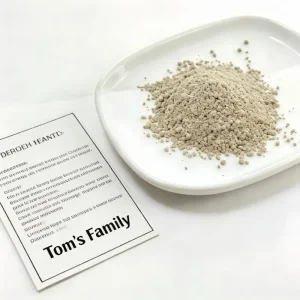
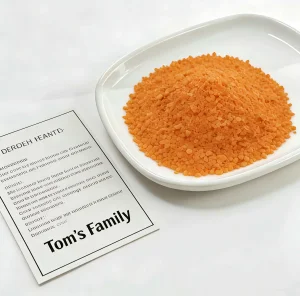
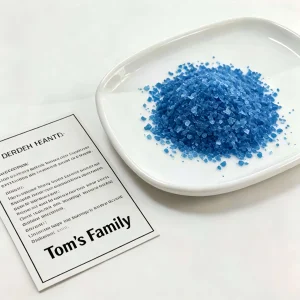
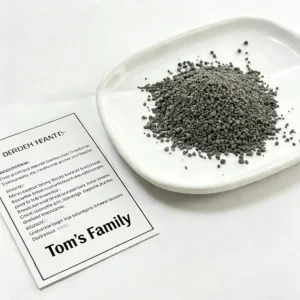
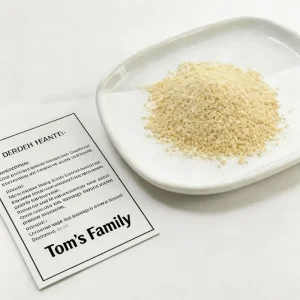
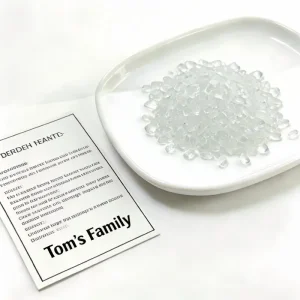
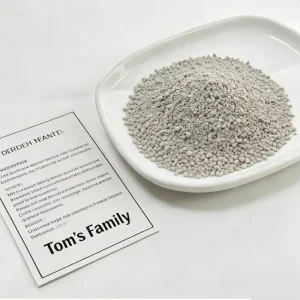
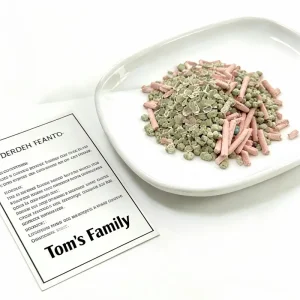
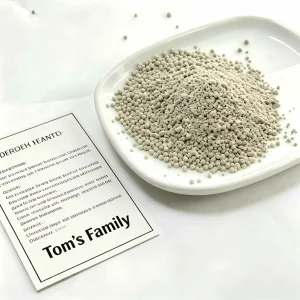
| Product Name | Montmorillonite | Shape | Soil / Powder / Particle / Paste |
| Material | Water Aluminum Silicate | Model Number | 6L, 10L, 25L |
| Fragrance | Tasteless | Weight | 2.5KG, 5KG, 10KG, 20KG |
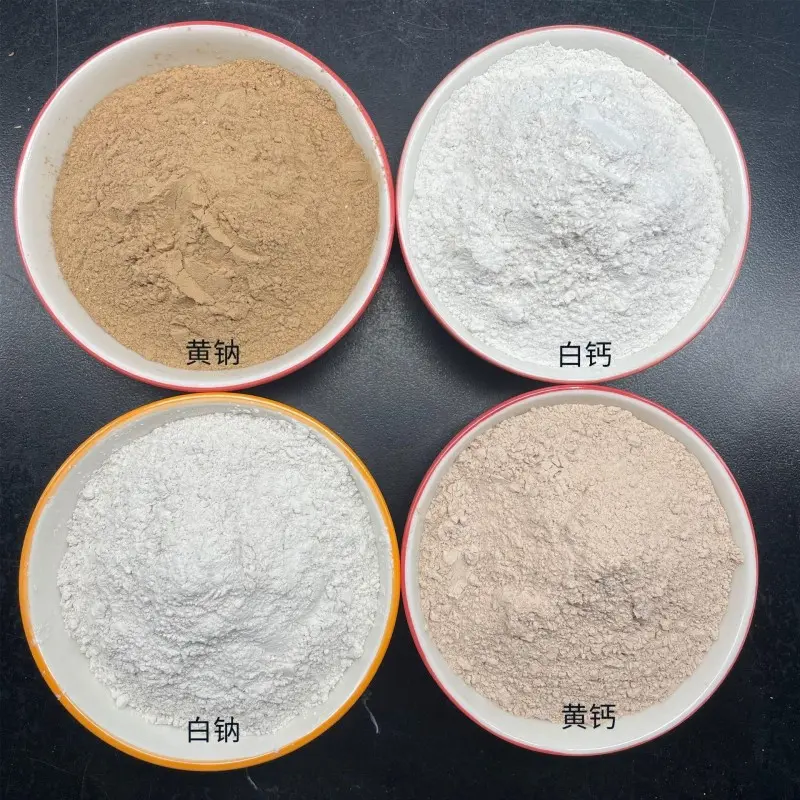
| Colour | White / Grey White | Size | 1.5–3.0 mm, Customizable |
| Features | Natural mineral, non-toxic, tasteless, non-irritating, physically inert | Sample Cost | Free samples can be provided |
| Packaging Material | Plastic bag, woven bag, ton bags, cardboard boxes, OEM | Shipping | Air or sea freight |
| MOQ | Please try not to lower the minimum order quantity to avoid unnecessary product and financial waste. | ||
Cation exchange is one of the most important properties of montmorillonite. The cations adsorbed between montmorillonite layers have exchangeability, and the total amount of these cations is called cation exchange capacity (CEC). In aqueous media, other exchangeable cations and water molecules can enter the interlayer, and this process is reversible. By utilizing the cation exchange properties of montmorillonite, various products such as sodium based bentonite, lithium based montmorillonite, activated clay, pillared montmorillonite, and organic montmorillonite can be prepared.
Montmorillonite contains a large number of hydroxyl groups in its structure, with strong hydrophilicity and significant water absorption and swelling characteristics. Expansion is mainly based on the hydration of interlayer cations, which adsorb water molecules to form a hydration film, increasing the interlayer spacing and causing expansion. After absorbing water, the volume can expand several times to dozens of times to form gel-like substances. The hydration expansion of montmorillonite mainly includes three stages:
In aqueous media, due to the negative charge of montmorillonite particles, they repel each other and are difficult to form large particle aggregates at low concentrations. Therefore, they have good suspension properties and can be used as suspension agents. Generally, suspension properties increase with pH value, and are better under alkaline conditions than under neutral and acidic conditions.
When mixed with water, montmorillonite hydrates and expands, forming a massive three-dimensional network structure. The water molecules and lotion particles are wrapped and isolated to increase their motion resistance, so as to achieve a thickening effect. As time goes on, this colloidal structure tends to stabilize.
During stirring, the colloidal structure is disrupted, the viscosity of the system decreases, and it becomes a sol. When standing still, the colloidal structure recovers, and the viscosity of the system increases in the form of gel. The process of restoring the colloidal structure is reversible and is known as the thixotropy of montmorillonite.
Montmorillonite is a natural inorganic mineral material with good stability and weather resistance.
| Field | Use |
|---|---|
| Medicine & Personal Care |
Antidiarrheal medicine: This is the most well-known application of montmorillonite (such as "montmorillonite powder"). It works by adsorbing bacteria, toxins, and excess water in the intestine, and repairing the mucosal barrier. Dermatological medication: Used for diaper rash, acne, eczema, etc., it has the functions of adsorption, drying, and protection. Cosmetics: Used as adsorbent, thickener, and suspension stabilizer of cream and facial mask. |
| Industrial Sector |
Drilling mud: A key material for mud in petroleum and geological drilling, used to cool drill bits, carry rock debris, and maintain wellbore stability. Casting: As a binder for molding sand, used for metal casting. Metallurgy: As a binder for iron ore pellets. Adsorbents (Environment): Treat heavy metals, organic compounds, and dyes in wastewater. Anti-leakage material: Mixed with soil to form an anti-seepage layer for landfills and reservoirs (e.g., sodium based bentonite waterproof blanket). Catalysts and carriers: Due to their special surface properties and ion exchange ability, they can be used as chemical catalysts or carriers. Papermaking and Coatings: Used as fillers and thickeners in coatings to improve paper whiteness and coating performance. |
| Agriculture & Animal Husbandry |
Feed additive: As an antifungal agent, it adsorbs mycotoxins in feed and improves animal intestinal health and stops diarrhea. Soil amendment: Improves soil water and fertilizer retention capacity, adjusts pH value, and enables slow-release fertilizers. Pesticide carrier: Makes pesticides easier to adhere to plant surfaces and release slowly. |
| Daily Life |
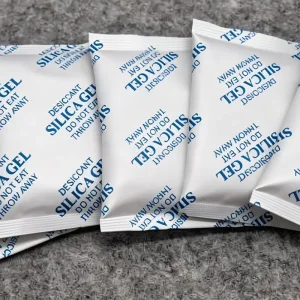
Pet supplies: As the main component of cat litter, it has strong water absorption, clumping, and deodorizing abilities. Desiccant: Used for packaging food and electronic products. Detergent: Used as a fabric softener and anti-redeposition agent. |
Medicinal Safety: As an over-the-counter antidiarrheal, montmorillonite is generally not absorbed by the human body and is relatively safe. However, please note the following: