Home >
Hot Products >
China Premium Montmorillonite Cat Litter - Strong Clumping, Fast Absorption, Low Dust, Long-Lasting Deodorization | China Suppliers & Factory Manufacturers, Factories
1 / 1
China Premium Montmorillonite Cat Litter - Strong Clumping, Fast Absorption, Low Dust, Long-Lasting Deodorization | China Suppliers & Factory Manufacturers, Factories
,
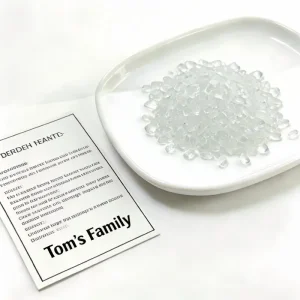
Discover the exceptional benefits of our product, designed for diverse applications in various industries. This product features strong adsorption capabilities, ensuring reliable performance across multiple surfaces. With long-lasting mucosal protection, it provides safe solutions without absorption, making it ideal for sensitive applications. Our product is also known for its broad spectrum applicability, catering to various needs. As a leading factory in China, we take pride in supplying high-quality products to meet the demands of our global partners. Choose us for dependable solutions and become one of the satisfied suppliers utilizing our innovative offerings.
Plastic bag, woven bag, ton bags, cardboard boxes, OEM
Shipping
Air or sea freight
MOQ
Please try not to lower the minimum order quantity to avoid unnecessary product and financial waste.
Why Choose Montmorillonite?
1Natural & Safe: Natural mineral raw materials — safe and non-toxic, with strong physical inertness, non-irritating, non-residual, and not absorbed by the body. Suitable for pets, infants, and young children.
2Super Strong Adsorption: First-class odor absorption layer structure brings a super large specific surface area, which can absorb odor, moisture, bacteria, and drug substances, locking odor as soon as it is touched.
3Fast Clumping: Quickly agglomerates when in contact with water, not easy to disperse. After absorbing water, it quickly expands and solidifies — compact clumps, does not stick to the bottom, easy to clean with low usage.
4Low Dust: Non-irritating to the nose and respiratory tract. Fine texture, high compaction, almost no dust — more friendly to sensitive individuals and pets.
5Strong Stability: Not easily deteriorated, moisture resistant, high temperature resistant, not easily moldy. Stored for a long time with stable performance.
Core Functions of the Product
1 Cation Exchange Property
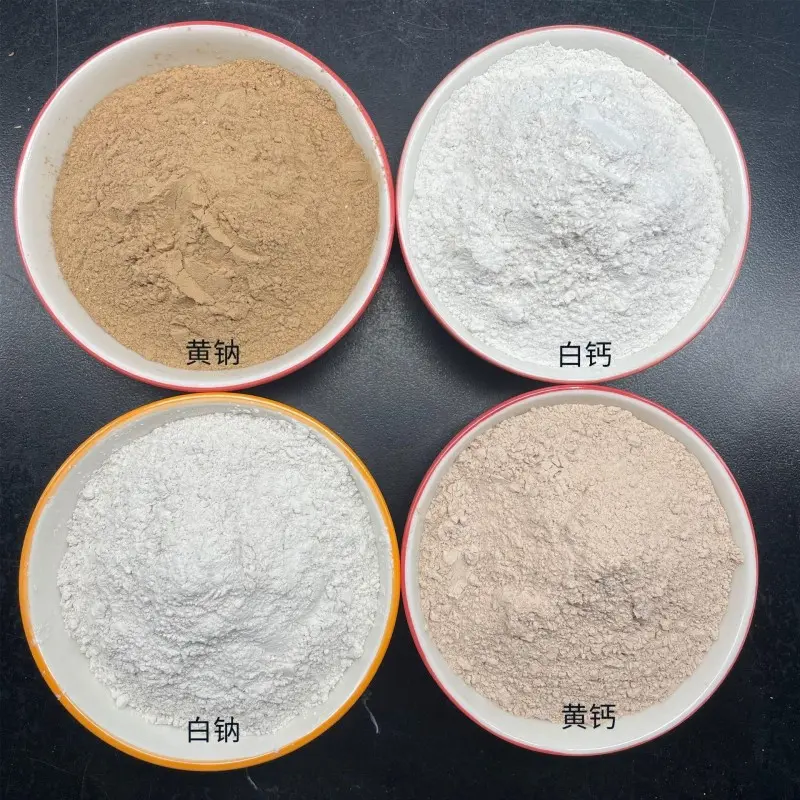
Cation exchange is one of the most important properties of montmorillonite. The cations adsorbed between montmorillonite layers have exchangeability, and the total amount of these cations is called cation exchange capacity (CEC). In aqueous media, other exchangeable cations and water molecules can enter the interlayer, and this process is reversible. By utilizing the cation exchange properties of montmorillonite, various products such as sodium based bentonite, lithium based montmorillonite, activated clay, pillared montmorillonite, and organic montmorillonite can be prepared.
2 Water Absorption and Swelling
Montmorillonite contains a large number of hydroxyl groups in its structure, with strong hydrophilicity and significant water absorption and swelling characteristics. Expansion is mainly based on the hydration of interlayer cations, which adsorb water molecules to form a hydration film, increasing the interlayer spacing and causing expansion. After absorbing water, the volume can expand several times to dozens of times to form gel-like substances. The hydration expansion of montmorillonite mainly includes three stages:
Surface hydration
Ionic hydration
Permeation hydration
3 Dispersed Suspension
In aqueous media, due to the negative charge of montmorillonite particles, they repel each other and are difficult to form large particle aggregates at low concentrations. Therefore, they have good suspension properties and can be used as suspension agents. Generally, suspension properties increase with pH value, and are better under alkaline conditions than under neutral and acidic conditions.
4 Thickening Property
When mixed with water, montmorillonite hydrates and expands, forming a massive three-dimensional network structure. The water molecules and lotion particles are wrapped and isolated to increase their motion resistance, so as to achieve thickening effect. As time goes on, this colloidal structure tends to stabilize.
5 Thixotropy
During stirring, the colloidal structure is disrupted, the viscosity of the system decreases, and it becomes a sol. When standing still, the colloidal structure recovers, and the viscosity of the system increases in the form of gel. The process of restoring the colloidal structure is reversible and is known as the thixotropy of montmorillonite.
6 Stability
Montmorillonite is a natural inorganic mineral material with good stability and weather resistance.
Good Chemical Stability: Montmorillonite is insoluble in water and various solvents, and is not reduced or oxidized at room temperature. It has a wide range of pH resistance and its structure is not easily affected by acids, bases, salts, etc. It has good compatibility with organic anions, alcohol solvents, etc.
Good Thermal Stability: The dehydroxylation temperature of montmorillonite is generally 550℃–750℃, at which the structural hydroxyl groups are removed but the layer structure is not destroyed, exhibiting good thermal stability.
Good Biological Stability: Montmorillonite is not affected by bacteria, microorganisms, etc. Its suspension is not easily moldy or spoiled under humid and hot conditions. It does not undergo enzymatic hydrolysis, odor, or viscosity reduction like organic thickeners such as cellulose and xanthan gum, and has superior anti-corrosion and anti-degradation properties.
Other Purposes
Field
Use
Medicine and Personal Care
Antidiarrheal medicine: This is the most well-known application of montmorillonite (such as "montmorillonite powder"). It works by adsorbing bacteria, toxins, and excess water in the intestine, and repairing the mucosal barrier.
Dermatological medication: Used for diaper rash, acne, eczema, etc., it has the functions of adsorption, drying, and protection.
Cosmetics: Used as adsorbent, thickener and suspension stabilizer of cream and facial mask.
Industrial Sector
Drilling mud: A key material for mud in petroleum and geological drilling, used to cool drill bits, carry rock debris, and maintain wellbore stability.
Casting: As a binder for molding sand, used for metal casting.
Metallurgy: As a binder for iron ore pellets.
Adsorbents (Environment): Treat heavy metals, organic compounds, and dyes in wastewater.
Anti-leakage material: Mixed with soil to form an anti-seepage layer for landfills and reservoirs (such as sodium based bentonite waterproof blanket).
Catalysts and carriers: Due to their special surface properties and ion exchange ability, they can be used as chemical catalysts or carriers.
Papermaking and Coatings: Used as fillers and thickeners in coatings to improve paper whiteness and coating performance.
Agriculture and Animal Husbandry
Feed additive: As an antifungal agent, it adsorbs mycotoxins in feed; improves animal intestinal health and stops diarrhea.
Soil amendment: Improves soil water and fertilizer retention capacity, adjusts pH value, and slow-releases fertilizers.
Pesticide carrier: Makes pesticides easier to adhere to plant surfaces and release slowly.
Daily Life
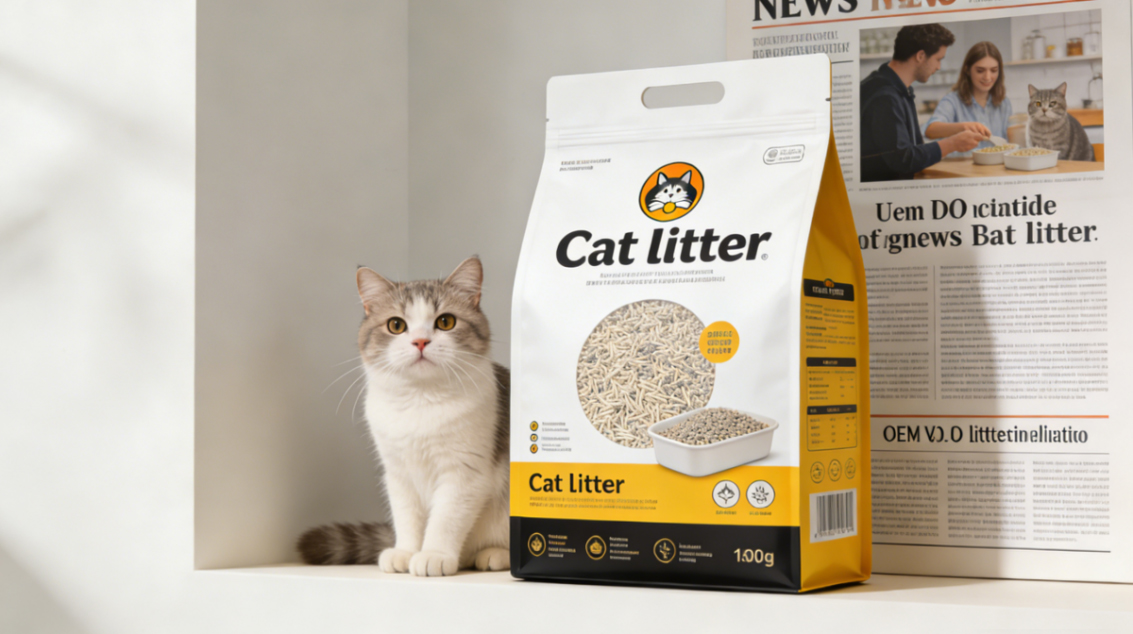
Pet supplies: As the main component of cat litter, it has strong water absorption, clumping, and deodorizing abilities.
Desiccant: Used for packaging food and electronic products.
Detergent: Used as a fabric softener and anti-redeposition agent.
Precautions
⚠️ Medicinal Safety
As an over-the-counter antidiarrheal, montmorillonite is generally not absorbed by the human body and is relatively safe. However, please note the following:
It should be taken 1–2 hours apart from other medications to avoid affecting their absorption.
Overdosing may lead to constipation.
When treating acute diarrhea, it is necessary to pay attention to fluid replacement to prevent dehydration.
⚠️ Industrial Grade vs. Pharmaceutical Grade
Montmorillonite with different uses has different purity and impurity control standards, and cannot be mixed. For example, industrial bentonite should never be consumed internally.
Frequently Asked Questions
Q What is montmorillonite and where does it come from?
Montmorillonite is a natural non-metallic mineral belonging to the smectite group of clay minerals. It is primarily composed of water aluminum silicate and is mined from bentonite deposits found worldwide. It is valued for its unique layered structure, large specific surface area, and excellent ion exchange capacity.
Q Is montmorillonite safe for use with pets and children?
Yes. Pharmaceutical-grade and pet-grade montmorillonite is a natural mineral that is non-toxic, tasteless, non-irritating, and physically inert. It is not absorbed by the body, making it safe for use by pets, infants, and young children. However, always ensure the product is of the appropriate grade for its intended use — industrial-grade bentonite should never be used internally.
Q What are the available sizes, weights, and packaging options?
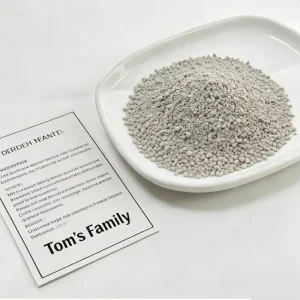
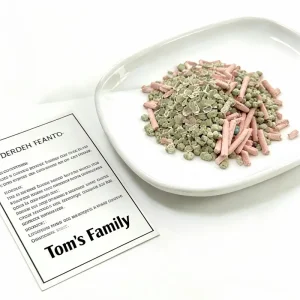
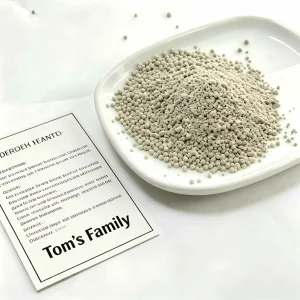
Montmorillonite is available in particle sizes of 1.5–3.0 mm (customizable), with model volumes of 6L, 10L, and 25L. Weight options include 2.5KG, 5KG, 10KG, and 20KG. Packaging options include plastic bags, woven bags, ton bags, cardboard boxes, and OEM custom packaging. Both air and sea freight shipping are supported.
Q What is the difference between industrial grade and pharmaceutical grade montmorillonite?
Industrial-grade and pharmaceutical-grade montmorillonite differ significantly in purity levels and impurity control standards. Pharmaceutical-grade is subject to strict quality controls to ensure it is safe for internal use (e.g., as an antidiarrheal medication). Industrial-grade bentonite is intended for drilling, casting, environmental, and other non-consumable applications and must never be ingested.
Q Can free samples be provided before placing a bulk order?
Yes, free samples can be provided for evaluation purposes. This allows buyers to assess the product quality, particle size, odor absorption, and clumping performance before committing to a larger order.
Q How should montmorillonite be stored to maintain its quality?
Montmorillonite has excellent stability and is moisture resistant, high temperature resistant, and not easily moldy. For best results, store it in a cool, dry, and well-ventilated area, away from direct moisture or water exposure. When stored properly, it maintains stable performance over a long period without degradation.
 TOM'S FAMILY