Why Choose Crystal Kitty Litter for Global Sourcing?

Time:2026-09-30 Author:Oliver
0%

Why Choose Crystal Kitty Litter for Global Sourcing?

Crystal Kitty Litter is gaining attention as cat owners seek cleaner, lighter, and more convenient litter solutions. Its silica crystals absorb liquid quickly and can reduce daily scooping when used correctly. Clear crystals also show saturation visibly, helping users judge replacement timing inside a real household.

Market evidence supports this shift toward premium pet-care products. The American Pet Products Association reported U.S. pet industry spending of $150.6 billion in 2023. Its 2024 outlook projected continued growth, reflecting strong demand for practical pet products. Euromonitor International’s pet-care research also highlights convenience, product quality, and premiumization as important purchasing trends. These reports do not guarantee every litter product will succeed. They do show a favorable commercial environment.

For global sourcing teams, crystal litter offers transport advantages because it is lightweight and highly concentrated. A smaller carton can contain substantial absorption capacity, reducing warehouse volume and handling pressure. However, sourcing decisions require more than attractive margins. Buyers should review particle size, dust performance, moisture absorption, fragrance content, packaging strength, and batch consistency. Safety Data Sheets and destination-market compliance documents should also be checked before purchase. Requirements may differ across regions, including chemical classification, labeling, packaging, and waste guidance. Supplier audits remain valuable, especially when samples look better than routine production. That risk is easy to underestimate. My view is positive, but not absolute: Crystal Kitty Litter deserves serious global consideration when verified performance, transparent documentation, and responsible sourcing work together.
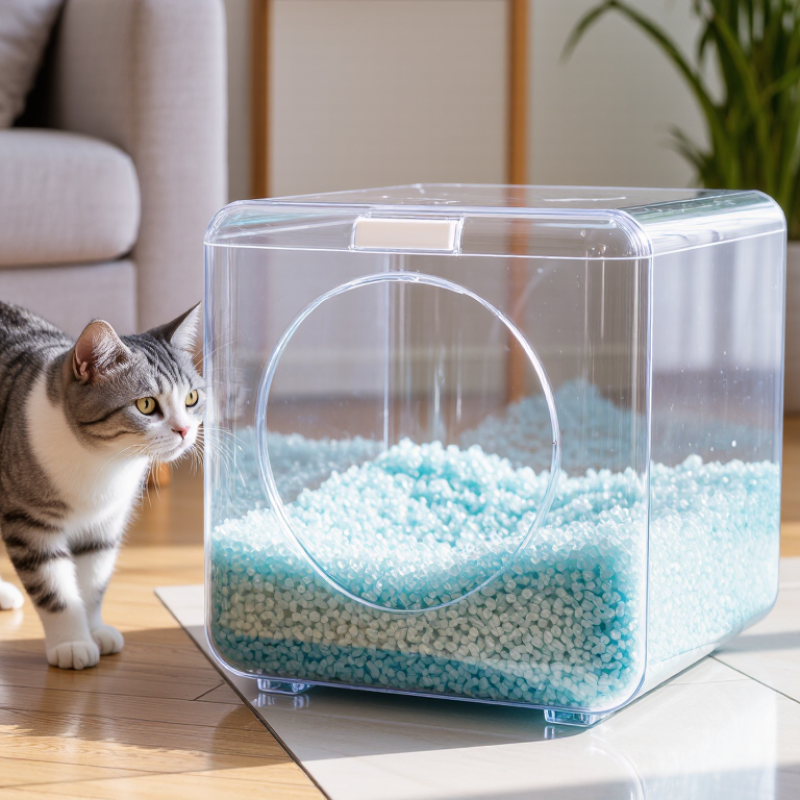
Why Choose Crystal Kitty Litter for Global Sourcing?

What Crystal Kitty Litter Is and How It Is Made

Crystal kitty litter is usually porous, amorphous silica gel—not the hard quartz crystals the name may suggest. Manufacturers commonly make it by reacting sodium silicate with acid, forming a hydrated silica gel. They wash and dry the material, then crush or shape it into granules and sieve it for a more consistent size. Those tiny pores absorb moisture; the granules can also trap some odor molecules. Production details vary, so “crystal litter” does not guarantee identical performance.

A useful market signal comes from Grand View Research’s 2023 cat litter report: it estimated the global market at about US$5.1 billion in 2022 and forecast 5.7% annual growth from 2023 to 2030. That estimate covers multiple litter types, not crystal litter alone. For global sourcing, buyers should check the product’s silica type, particle-size range, moisture level, and dust-control specifications. Request current test documents, too. Numbers matter.

Tips: Ask suppliers for a batch-specific certificate of analysis and safety data sheet. Check granules in a clear sample jar: excessive fines often settle at the bottom. “Dust-free” is rarely absolute, so compare documented test methods rather than relying on the label.

Key Properties That Shape Its Use in Cat Care

Crystal litter is made from porous silica gel that absorbs moisture through its many small channels. It usually does not form firm clumps, so daily care involves removing solid waste and stirring the crystals to distribute damp areas. Follow the package directions, since crystal sizes and formulas vary. Odor control also depends on ventilation and regular cleaning. No magic here.

Its light weight can make bags easier to handle, a practical detail for global sourcing. But dust levels, grain size, and absorption capacity differ between suppliers, so compare samples in ordinary home conditions. Fine grains may cling to paws, while larger pieces can feel unfamiliar to some cats. Watch the tray. A gradual transition can show whether a cat accepts the texture. Replace the litter when it stays damp or odors persist, even if the surface looks clean. Cats with irritated paws or breathing sensitivities may need another option; consult a veterinarian if symptoms continue. A tidy-looking tray is not always a comfortable one.

Why Choose Crystal Kitty Litter for Global Sourcing?

A key property behind silica-gel crystal litter is its ability to adsorb moisture.

Typical silica-gel adsorbents can hold roughly 20–40% of their dry mass in water vapor. Actual capacity varies with humidity and material formulation, so this general material range is not a guarantee for every cat-litter product.

How Crystal Litter Compares With Other Litter Types

When comparing crystal litter with clay, wood, or paper, assess daily handling—not just bag price.

Grand View Research estimated the global cat litter market at USD 11.13 billion in 2023 and projected a 4.4% compound annual growth rate from 2024 to 2030. This market estimate signals demand, not proof that one material performs best.

Crystal litter uses porous silica gel to absorb moisture. Its lighter weight can make carrying and pouring easier, while visible wet patches help indicate where crystals are saturated. Still, crystals do not form scoopable urine clumps like clumping clay.

Clumping clay offers familiar spot-cleaning: remove solid clumps, then top up the tray. It can be heavy, and dust levels vary by product.

Wood and paper litters use different absorbent materials; pellets may feel unfamiliar to some cats, and odor control depends on formulation and tray maintenance. Small details matter. A dusty corner, damp crystals, or scattered pellets can change the cleaning routine.

For sourcing, compare material specifications, particle size, packaging weight, and supplier test methods. Ask for results on absorption and dust rather than relying on broad claims.

No single report settles the choice: Grand View Research tracks market segments, while the best fit still depends on household use and cats’ acceptance. One practical check is a gradual trial with the existing litter kept available.

Factors to Assess When Sourcing Crystal Kitty Litter Globally

When sourcing crystal kitty litter globally, assess the product and the supplier’s ability to deliver it consistently. Crystal litter is commonly made from silica gel, but crystal size, dust levels, and absorption performance can vary. Request product specifications and current safety documentation, then compare claims against independent test results where available. Dust matters, especially when bags are poured indoors.

Check batch consistency, production capacity, and traceability. Ask for samples from more than one production run, not just a polished presentation sample. Review packaging closely: a weak seal can let moisture in during storage or ocean transit. Confirm carton dimensions, pallet configuration, lead times, and how delays are communicated. A low unit price may not stay low after freight, breakage, or extra handling costs.

Test samples with a small group of cats before placing a large order. Record odor control, tracking around the tray, and how quickly crystals become saturated. Keep the test conditions consistent; changing several variables at once makes results hard to interpret. No checklist catches every issue. Supplier documents can look complete while real-world performance disappoints, so retain samples and compare them with later shipments. Also ask what disposal guidance is provided, since local waste systems differ and litter should not be assumed suitable for every disposal route.

Why Choose Crystal Kitty Litter for Global Sourcing? - Factors to Assess When Sourcing Crystal Kitty Litter Globally
Assessment factor Relevant product or sourcing facts What to verify before purchase
Material identity Crystal litter is commonly made from silica gel, a porous form of amorphous silicon dioxide. “Crystal” describes the product’s appearance and does not, by itself, establish its chemical composition. Request a current safety data sheet (SDS), ingredient or composition declaration, and documentation identifying the silica type. Do not assume all silica materials have the same properties.
Moisture handling Porous silica gel can take up moisture and help reduce wetness in the litter tray. Performance depends on the formulation, crystal structure, litter depth, use, and maintenance routine. Compare samples under the same test conditions. Ask for the test method and results rather than relying on unqualified claims such as “maximum absorption.”
Odor control Moisture management can help control odors, but results vary with litter-box hygiene, ventilation, household conditions, and the product’s ingredients. Fragrance-free and scented versions may have different customer appeal. Check odor-control claims with a documented evaluation. Confirm fragrance ingredients and labeling requirements for each destination market.
Dust and particle quality Dust levels and particle-size distribution differ by product and manufacturing process. Smaller or broken particles may affect handling and user perception. Set a written dust or fines specification, request batch test results, and inspect samples from more than one production lot. Confirm that product claims are supported by a defined test method.
Clumping and cleanup Many crystal litters are non-clumping: liquid is absorbed into the crystals, while solid waste is removed separately. Product designs and recommended replacement schedules vary. Confirm whether the product is clumping or non-clumping and ensure use instructions explain scooping, stirring if recommended, and full replacement according to the product directions.
Packaging and moisture protection Because the product is intended to absorb moisture, packaging integrity and storage conditions matter. Long-distance transport can expose packs to handling, compression, and changing humidity. Check pack sealing, puncture resistance, carton strength, pallet configuration, and storage guidance. Conduct transit or drop testing for the intended shipping route.
Freight and landed cost The total sourcing cost includes more than the quoted product price. Pack size, pallet utilization, freight, duties, insurance, handling, and local distribution affect landed cost. Compare quotations using the same Incoterms® rule, destination, pack weight, and order volume. Calculate cost per saleable kilogram after freight, duties, and expected damage.
Regulatory and safety review Import, chemical communication, packaging, and consumer-product requirements differ by country. Classification should be based on the actual product composition and applicable local rules. Have the importer or local compliance specialist review the SDS, labels, claims, and import documentation for every target market before shipment.
Quality consistency Appearance, crystal size, color, dust, and moisture performance can vary between batches if specifications and process controls are not consistent. Agree on a product specification, sample-approval process, batch traceability, inspection plan, and corrective-action procedure. Retain an approved reference sample.
Disposal and environmental claims Used litter disposal depends on local waste rules and the product instructions. Do not assume crystal litter is flushable, compostable, or biodegradable without product-specific evidence and local approval. Verify disposal guidance for the target market. Request substantiation for environmental claims and check packaging recyclability against local collection systems.
Supply reliability International sourcing can be affected by production capacity, raw-material availability, port conditions, transit times, and seasonal demand. Confirm lead times, minimum order quantities, production capacity, reorder terms, contingency planning, and communication procedures for delays.

Packaging, Shipping, and Supply Chain Considerations

For global sourcing, crystal kitty litter needs packaging that protects both the granules and the shipment. Use sealed, moisture-resistant bags and check their drop strength, seal quality, and pallet stability. A torn corner can scatter fine particles across a container floor. Small details matter. Compare bag size and pallet pattern against container dimensions before confirming an order; unused space can raise freight costs per unit.

Shipping schedules need room for disruption. UNCTAD’s Review of Maritime Transport 2024 reported that global maritime trade grew 2.4% in 2023, while rerouting and longer voyages added pressure to shipping capacity. Buyers can reduce surprises by confirming shipment windows, port options, and responsibility for freight delays in writing. Delays happen. Keep a modest buffer in inventory, especially when replenishment depends on a single sailing route.

The World Bank’s 2023 Logistics Performance Index estimated an average of 44 days for goods to travel from an exporter’s warehouse to an importer’s, with variation of about 10.5 days. That spread makes promised lead times worth testing against actual delivery records. Request batch-level quality documents, inspect packaging at loading, and track container milestones. A tidy spreadsheet cannot prevent every delay, and suppliers may not control port congestion. Still, clear records help buyers spot recurring problems before the next order.

FAQS

What is crystal kitty litter made from?

It is usually porous, amorphous silica gel. Manufacturers react sodium silicate with acid, then wash, dry, shape, and sieve it.

How does crystal kitty litter absorb moisture?

Tiny pores inside the granules hold moisture. They may also trap some odor molecules. Performance varies between products.

Does “crystal” mean every product performs the same way?

No. Crystal size, moisture level, dust, and absorption can differ. The name alone proves very little.

What documents should global buyers request?

Request a batch-specific certificate of analysis and a current safety data sheet. Check silica type, particle size, moisture, and dust-control results.

How can buyers inspect a sample before ordering?

Place granules in a clear jar and watch for settled fines. Excessive dust may appear at the bottom. Labels are not enough.

How should product performance be tested with cats?

Test samples from several production batches with a small group of cats. Record odor control, tracking, saturation speed, and user acceptance.

What packaging details matter during international shipping?

Use sealed, moisture-resistant bags with strong seals and drop resistance. Inspect pallet stability. A torn corner can spread particles across a container floor.

How can buyers reduce shipping and supply risks?

Confirm carton dimensions, pallet patterns, shipment windows, port options, and delay responsibilities in writing. Keep a modest inventory buffer. Delays happen.

What hidden costs should buyers consider?

Compare the full delivered cost, including freight, breakage, handling, storage, and wasted container space. A low unit price may not stay low.

What disposal guidance should buyers review?

Ask for clear disposal guidance and check local waste rules. Disposal routes differ. Do not assume every system accepts used litter.

Conclusion

Crystal Kitty Litter is typically made from processed silica-based crystals designed to absorb moisture and help control odors. Its lightweight texture, absorbency, and low-dust potential can make it a practical option for cat care, although performance depends on the product’s composition and how it is used. Compared with clay, paper, or plant-based litters, crystal litter may differ in weight, maintenance needs, feel under a cat’s paws, and disposal considerations. These differences make it important to match the litter type to the needs of cats and their caregivers.

For global sourcing, buyers should assess material quality, consistency between batches, absorbency, odor control, dust levels, and clear product specifications. Packaging should protect the crystals from moisture and damage while remaining suitable for handling and storage. Freight options, shipment size, lead times, and supply reliability also affect overall costs and availability. Careful supplier evaluation and planning can help buyers source Crystal Kitty Litter that meets their intended use and practical supply requirements.


Oliver

Oliver

Oliver is a seasoned marketing professional with a wealth of expertise in driving brand awareness and engagement. With a deep understanding of our company's product offerings, he consistently delivers high-quality content that enriches our professional blog. His insights not only shed light on......