Global demand for Silica Gel Cat Litter is expanding as cat ownership, urban living, and convenience-focused pet care continue to grow. Grand View Research estimated the global cat litter market at approximately USD 5.8 billion in 2022, with steady growth projected through 2030. Fortune Business Insights also identifies premium and specialized litter products as important market segments. These figures suggest opportunity, but they do not prove that every supplier offers consistent quality.
Feline veterinarian Dr. Elizabeth Colleran has stated, “The litter box is the most important piece of furniture in your cat’s life.” Her observation places product safety, comfort, and daily usability above simple price comparisons. For global buyers, a reliable Silica Gel Cat Litter supplier should demonstrate stable crystal absorption, low dust, effective odor control, and controlled particle size. Packaging strength matters too. A damaged 10-kilogram bag can create avoidable losses during ocean transport.
This guide examines leading suppliers through practical purchasing criteria. These include production capacity, private-label support, minimum order quantities, export experience, laboratory testing, and certification transparency. Supplier claims require verification. A polished website is not enough.
Some buyers may also overlook tracking and paw comfort. That can become a costly mistake. The best supplier depends on the destination market, cat preferences, climate, and retail positioning. No ranking is permanently perfect. However, careful comparison can reduce supply risks and support safer, more dependable purchasing decisions.
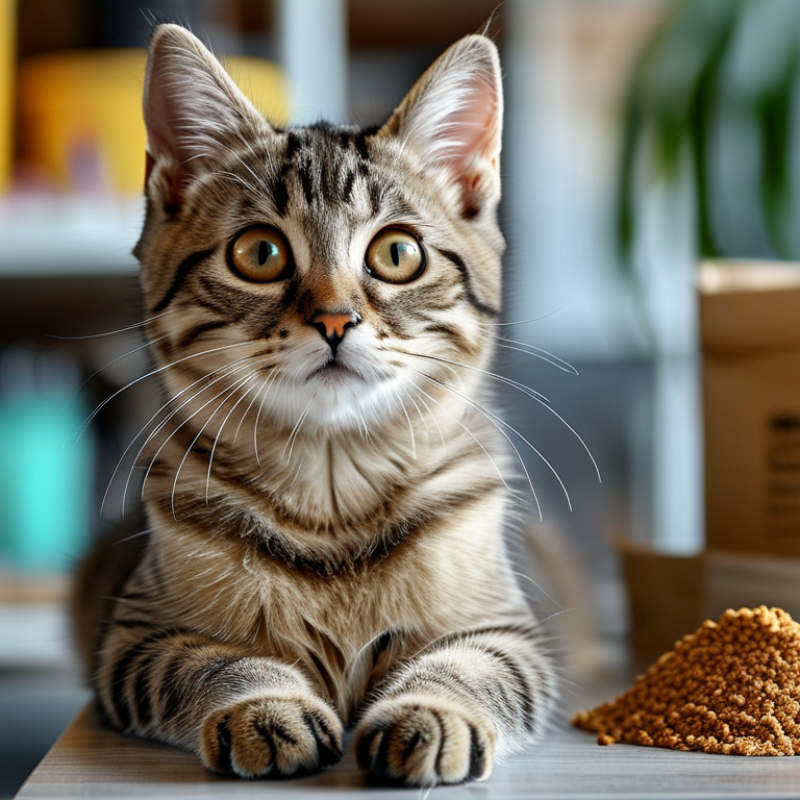
Top Silica Gel Cat Litter Suppliers for Global Buyers
Silica gel cat litter is made from porous crystals that capture urine moisture inside their internal structure. Some grades advertise absorption of up to 40 times their weight. This figure depends on testing conditions, crystal density, and moisture exposure. It should not be treated as a universal result.
Granule size strongly affects daily use. Fine 1–3 mm particles absorb quickly and feel soft under a cat’s paws. However, they may create more tracking near the litter box. Larger 4–8 mm granules usually produce less dust and are easier to separate from solid waste. They can feel harder, though, and some cats may reject the texture. A mixed size range can balance absorption, comfort, and handling.
Experienced buyers should request particle-size data, moisture content, dust testing, and packaging specifications before placing an order. Ask for independent test reports when possible. Check whether the stated 40× absorption rate uses dry-weight testing or real-use conditions. That difference matters. During storage, damaged bags can absorb humidity before reaching the customer, reducing performance. Strong inner liners, sealed cartons, and clear batch identification improve reliability. Supplier evaluation should also include sample trials, odor control observations, and feedback from actual cats. Lab results help, but cats remain unpredictable.
| Specification | Typical Range or Information | Buyer Relevance | Recommended Verification |
|---|---|---|---|
| Primary material | Amorphous silica gel, generally produced from sodium silicate and acidification | Provides high porosity and rapid liquid adsorption without forming traditional clay clumps | Request the material safety data sheet and product composition statement |
| Granule size | 1–8 mm; fine, medium, and coarse grades may be offered | Particle size affects paw feel, tracking, drainage, dust generation, and visual appearance | Ask for sieve analysis showing the percentage retained within the selected size range |
| Absorption claim | Some commercial specifications state up to 40× absorption; actual capacity depends on pore structure, liquid type, and test method | A high headline value should not be compared without a common measurement basis | Confirm whether the result is reported by mass or volume and request the complete test procedure |
| Typical liquid uptake behavior | Adsorbs urine and other moisture into internal pores; it does not normally form a solid clump | Users usually remove solid waste and stir or replace saturated granules | Evaluate performance using a standardized liquid volume and contact time |
| Moisture content | Often specified at approximately 2–5% for a dry, free-flowing product | Lower moisture generally helps preserve unused absorption capacity during storage and transport | Request a recent certificate of analysis and define the test method |
| Bulk density | Common commercial ranges are approximately 0.45–0.75 g/cm³, depending on granule structure | Influences package size, freight calculations, filling weight, and user handling | Check density using a defined container volume and packing procedure |
| Dust level | Depends on crushing resistance, screening, handling, and packaging; low-dust grades are available | Lower dust improves handling and helps reduce airborne particles around the litter tray | Request fines content or dust-test results and inspect samples after simulated transport |
| Particle shape | Beads, granules, or irregular particles with clear, white, or colored appearance | Shape affects tracking, comfort, breakage, and the consistency of the user experience | Review particle photographs and conduct a hands-on sample assessment |
| Odor control | Porous silica can retain moisture and help reduce odor, but it does not neutralize every odor chemically | Ventilation, waste removal frequency, tray design, and optional additives also affect odor performance | Use a controlled odor test and confirm whether fragrance or additives are included |
| pH value | Often targeted near neutral to mildly alkaline, commonly about pH 6.5–8.5 in water extraction tests | A consistent pH specification supports product quality control and formula comparison | Confirm the extraction ratio, measurement temperature, and laboratory method |
| Color options | Natural translucent or white; colored granules may use approved mineral or synthetic colorants | Color can support product positioning, but it should not replace performance testing | Request colorant details and verify compliance with the destination market’s regulations |
| Packaging formats | Common retail sizes include approximately 2–5 L; larger bulk bags are used for commercial distribution | Packaging influences shelf presentation, moisture protection, pallet efficiency, and freight cost | Specify net weight or volume, inner liner, sealing method, carton dimensions, and pallet pattern |
| Storage requirements | Store sealed in a cool, dry, well-ventilated area away from water and high humidity | Moisture exposure before use can reduce effective absorption performance | Define storage conditions, packaging integrity requirements, and recommended shelf-life labeling |
| Export documentation | Commercial invoice, packing list, bill of lading, safety documentation, and destination-specific compliance files may be required | Complete documentation helps reduce customs delays and supports importer compliance | Confirm HS classification, labeling language, import rules, and required test certificates before shipment |
| Disposal guidance | Used silica gel litter should generally be placed in household waste unless local regulations state otherwise; do not flush it | Local waste rules and wastewater systems differ between countries and regions | Add destination-market disposal instructions to the product label and packaging artwork |
: It uses porous crystals that trap urine moisture inside tiny internal spaces. Some grades claim absorption up to 40 times their weight. That number is conditional.
No. Results depend on crystal density, testing conditions, and moisture exposure. Ask whether testing used dry material or real-use conditions. I would not treat 40× as guaranteed.
Fine 1–3 mm granules absorb quickly and feel softer under paws. They may track more around the tray. Larger 4–8 mm granules usually create less dust and simplify solid-waste separation. Some cats dislike the harder texture.
It can balance absorption, comfort, dust, and handling. The balance is imperfect. Test cat acceptance before making a large purchase.
Request particle-size data, moisture content, dust results, bulk density, and packaging details. Ask for independent reports when available. One sample is not enough. Request three production lots.
Readings above 5% deserve review. High moisture can suggest weak drying or humidity exposure. Damaged bags may absorb moisture during storage and shipping.
Ask for inhalable and respirable dust measurements, not only “low dust.” Odor tests should state humidity, loading, exposure time, and comparison controls. There is no universal odor score.
Strong inner liners, sealed cartons, and clear batch identification reduce shipping and storage risks. Check the product again after delivery. Laboratory results can look polished, yet daily performance may disappoint.
This guide explains the essential characteristics of Silica Gel Cat Litter, including its highly absorbent structure, which can retain up to 40 times its weight in liquid, and granule sizes commonly ranging from 1 to 8 mm. It also outlines key quality benchmarks for international buyers, such as moisture content, dust levels, bulk density, liquid absorption, and odor-control performance. Consistent testing is important for ensuring product stability, cleanliness, and reliable use.
The article also presents a practical framework for evaluating suppliers. Buyers should review ISO 9001 certification, REACH-related compliance information, SDS files, and batch-level test records. In addition, sourcing decisions should consider minimum order quantities, 20-foot container loading capacity, production lead times, payment terms, and applicable Incoterms. A structured supplier comparison covering pricing, manufacturing capacity, certifications, and export experience can help global buyers identify dependable partners and reduce purchasing risks.

 TOM'S FAMILY