Finding reliable Fresh Cat Litter suppliers in China requires more than comparing online prices. Product quality can change between samples and full production. Packaging photos may also hide weak sealing, excessive dust, or inconsistent granules. A serious sourcing process should examine the factory, materials, testing records, and export experience.
Dr. Mikel Delgado, a certified cat behavior consultant, often emphasizes that cats need litter boxes that are “clean, quiet, and easy to access.” Her point also matters to suppliers. Fresh Cat Litter should control odor without creating a strong artificial smell. It should form stable clumps, produce minimal dust, and feel comfortable under sensitive paws. Ask for samples from different production batches. Check absorption in a simple tray test. Observe tracking on tile and fabric. Small details matter.
Supplier verification needs practical evidence. Request business licenses, factory photographs, production capacity, quality-control procedures, and relevant test reports. If possible, arrange an independent factory audit. Confirm bentonite, tofu, corn, or recycled-paper content before signing a contract. Also review minimum order quantities, lead times, carton strength, labeling accuracy, and after-sales support. A low quotation may conceal higher shipping costs or unstable supply.
No supplier is perfect. Even a polished factory may miss a sealing issue during busy seasons. That is why written specifications, pre-shipment inspections, and batch retention samples are valuable. A trustworthy partner welcomes questions and admits limitations. This guide explains how to compare Chinese suppliers carefully, reduce avoidable risks, and select Fresh Cat Litter that performs consistently for cats, retailers, and distributors.
Define Demand Using China’s 69.8 Million Urban Pet Cats Reported in 2023
69.8 million
China’s urban cat population in 2023
China’s urban cat population reached 69.8 million in 2023, according to the China Pet Industry White Paper. This figure should shape every supplier search. It indicates a large, recurring need for absorbent, low-dust, and odor-controlling litter. However, population size alone does not equal purchasing volume. Cat ownership differs across cities, income groups, and household habits.
A practical demand model starts with monthly usage. If one cat consumes four to six kilograms of litter monthly, the urban market could require roughly 3.35 to 5.03 million tonnes annually.
This is only a planning estimate, not an official statistic. It needs testing through distributor interviews and regional sales records.
Euromonitor International’s Pet Care in China research also highlights the country’s expanding pet-care consumption, supporting a closer review of packaging sizes, online demand, and repeat purchases.
Look beyond attractive quotations.
Request recent production records, material specifications, dust-test results, moisture data, and batch samples. Check whether the supplier can maintain consistent granule size during peak seasons.
A factory may offer competitive prices but lack stable export documentation or quality controls. That mistake is easy to make.
Compare at least three Chinese suppliers using the same test conditions. Measure clumping time, odor retention, tracking, breakage, and delivery consistency before placing a larger order.
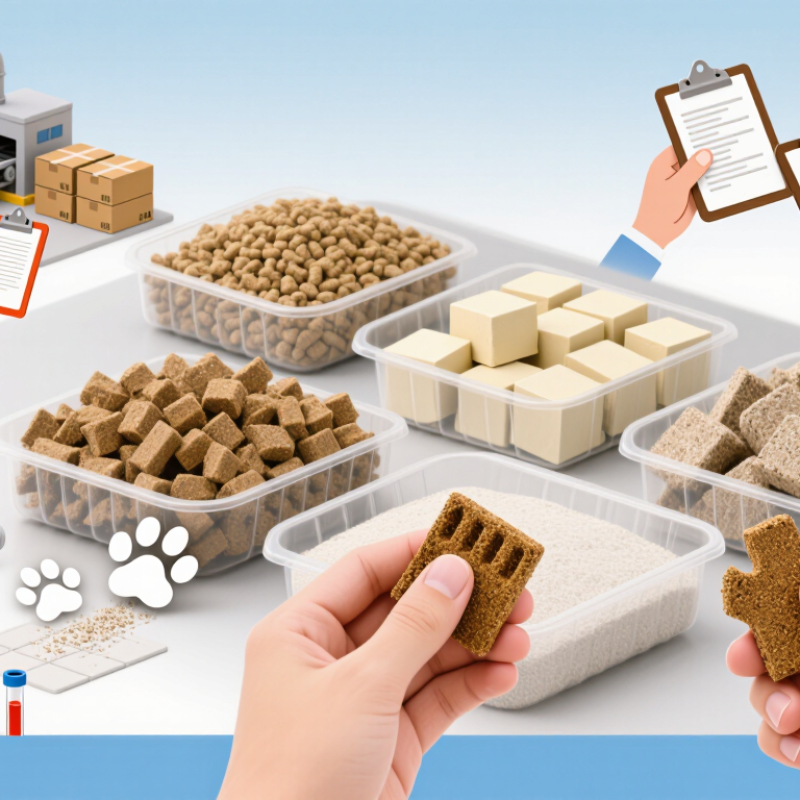
Compare Bentonite, Tofu, Wood, and Silica Litter by Absorption and Dust Data
Finding top fresh cat litter suppliers in China starts with comparable test data, not attractive packaging. Request the production date, moisture level, and batch number for every sample. Fresh material usually shows more stable texture and odor control.
Bentonite often forms firm clumps, but its dust level can vary sharply after crushing. Ask for absorption in grams per gram and dust below a stated sieve size. Tofu litter is lightweight and can absorb quickly, although weak clumps may break during scooping. Wood litter feels natural and controls odor well, but its lower density can require more volume. Silica absorbs liquid efficiently and remains dry on the surface. However, it does not clump like mineral litter, so direct comparisons can be misleading. Test each type separately.
Use the same liquid volume, temperature, and contact time. A simple trial can use 100 grams of litter and 50 milliliters of colored water. Record absorption after five and thirty minutes. Also weigh airborne dust after a controlled pour. Small details matter.
Visit the supplier’s mixing, drying, screening, and packing areas when possible. Check whether workers can explain their testing method clearly. Ask for independent laboratory reports, but verify that the report matches your sample batch. A supplier may provide excellent data from an older lot. That needs questioning.
I would also test leaking bags, broken pellets, and odor after seven days. These checks are less scientific, but more realistic. My own comparison may still miss household differences. Cats are not laboratory instruments.
Verify Factory Capacity Through ISO 9001, BSCI, SGS Testing, and COAs
Finding reliable fresh cat litter suppliers in China requires more than comparing prices or attractive product photos. Factory capacity should be verified through ISO 9001, BSCI audit records, SGS testing, and batch-specific COAs. These documents reveal how consistently a supplier manages materials, workers, production, and quality controls.
ISO 9001
ISO 9001 records can show whether documented procedures guide incoming material checks, moisture control, packing, and complaint handling. Confirm the certificate’s validity, issuing body, factory address, and product scope.
BSCI Audit Records
BSCI audit results provide useful insight into working conditions and supplier accountability. However, an audit date matters. Old records may not reflect current operations.
SGS testing can verify selected properties, such as moisture, dust, odor, or absorption performance, depending on the agreed specification. Request the full report, not only a logo or screenshot. A COA should match the shipment batch, production date, test method, and measured results. Generic COAs deserve careful questions.
Ask for production-line photographs, monthly output records, warehouse details, and traceability samples. A factory may claim high capacity while outsourcing key processing steps. That is not automatically unacceptable, but it must be disclosed.
I have learned that paperwork can look convincing while practical evidence remains thin. An on-site visit or live video inspection may expose uneven packaging, limited storage, or manual processes that affect consistency. Compare documents with samples, factory answers, and shipment records before approving a supplier.
Audit Moisture, Clumping, Odor Control, Packaging, and Batch Consistency
Finding a reliable cat litter supplier in China requires more than comparing prices. APPA’s 2024 National Pet Owners Survey reported about 46.5 million U.S. households owning cats, creating steady demand for consistent litter performance. During a factory audit, request production records, raw-material specifications, and recent third-party test results. Do not rely on a showroom sample alone.
Measure moisture from sealed bags and freshly opened bags. Excess moisture can weaken clumping and shorten shelf life. For bentonite litter, test clump formation after five, ten, and fifteen minutes. Record clump weight, breakage, and residue on the tray. Odor control also needs a practical test. Use identical litter boxes, equal waste loads, and controlled ventilation. A clean sample can still mislead.
Packaging deserves equal attention. Check seal strength, inner-bag thickness, dust leakage, printing accuracy, and pallet stability. Compare these findings with the supplier’s batch records. Grand View Research identifies clumping litter as a major product segment, but market growth does not guarantee factory discipline. Ask for at least three consecutive batch samples, then compare moisture, particle size, absorption, and odor results. One perfect batch is not proof. I would also audit corrective-action records, because repeated small deviations often reveal weak process control. Supplier promises sound useful, but measured evidence is safer.
How to Find Top Fresh Cat Litter Suppliers in China? - Audit Moisture, Clumping, Odor Control, Packaging, and Batch Consistency
Anonymized supplier audit comparison based on standardized incoming-sample checks. Results should be confirmed through independent laboratory testing and on-site quality audits.
| Audit Profile |
Moisture
(% w/w) |
Clump Strength
(N after 10 min) |
Liquid Absorption
(mL/g) |
Odor Control
(24-hour panel score / 5) |
Packaging Seal
Pass Rate |
Batch Variation
(CV, %) |
Foreign Material
Finding |
Overall
Score |
Audit Result |
| Profile A |
8.1 |
18.6 |
2.42 |
4.4 |
99.2% |
2.1 |
None detected |
94/100 |
Pass |
| Profile B |
9.4 |
16.9 |
2.31 |
4.1 |
98.6% |
3.4 |
None detected |
89/100 |
Pass |
| Profile C |
10.7 |
14.8 |
2.08 |
3.6 |
96.9% |
5.8 |
1 minor fiber |
78/100 |
Conditional |
| Profile D |
7.6 |
19.4 |
2.57 |
4.6 |
99.7% |
1.7 |
None detected |
97/100 |
Pass |
| Profile E |
12.3 |
11.9 |
1.84 |
3.0 |
92.8% |
8.9 |
2 small fragments |
64/100 |
Review |
| Profile F |
8.9 |
17.5 |
2.26 |
4.0 |
97.9% |
4.2 |
None detected |
85/100 |
Pass |
Audit interpretation:
Lower moisture and batch coefficient of variation generally indicate better storage stability and consistency. Higher clump strength, absorption, odor-control scores, and packaging seal pass rates indicate stronger performance. Any foreign-material finding requires corrective-action review before approval.
Rank Suppliers by MOQ, Lead Time, Export Compliance, Samples, and Total Cost
How to Find Top Fresh Cat Litter Suppliers in China?
A practical supplier review should rank more than factory price. Start with MOQ, lead time, export compliance, samples, and total cost. Record each result in one comparison sheet. A low MOQ can help new buyers test demand. However, small orders may carry higher unit costs. Ask for production schedules, packaging details, and recent quality records. A reliable supplier should answer clearly and provide consistent documents.
Lead time needs careful checking. Request separate timelines for sampling, production, inspection, and shipping. Export compliance also matters. Confirm material declarations, safety documents, product labels, and destination-market requirements before payment. Samples reveal dust levels, absorption, odor control, granule size, and packaging strength. Test them under similar household conditions. One sample is not enough. My early comparisons focused too heavily on price, and that caused avoidable delays.
Tips: Rank every supplier from one to five for each category. Calculate total cost, including tooling, sample fees, inland freight, inspection, shipping, tariffs, and possible rework. Ask for a written quotation with validity dates. Keep backup suppliers in the shortlist. This process is imperfect. Weather, port congestion, and raw material changes can still affect delivery. Recheck critical details before placing a large order.
Conclusion
Finding reliable Fresh Cat Litter suppliers in China starts with a clear understanding of market demand, product positioning, and purchasing volume. With 69.8 million urban pet cats reported in 2023, buyers should estimate target regions, monthly consumption, preferred litter types, and expected reorder frequency. Compare bentonite, tofu, wood, and silica litter based on absorption, clumping strength, odor control, tracking, and dust performance to identify the best match for different customers and price levels.
Supplier verification should include factory capacity, ISO 9001 systems, BSCI assessments, SGS test reports, and complete certificates of analysis. During an audit, examine moisture levels, packaging quality, batch consistency, clump formation, and odor-control results. Finally, rank suppliers by minimum order quantity, lead time, export documentation, sample support, communication, and total landed cost. A structured comparison and sample-testing process can help buyers choose a stable, transparent, and scalable manufacturing partner.

 TOM'S FAMILY