Global cat ownership is supporting a substantial market for litter products. Grand View Research estimated the global cat litter market at about USD 5.5 billion in 2023, with continued growth projected through 2030. This figure covers the broader category, not Flushable Cat Litter alone. Still, it signals why international buyers are examining new materials, packaging, and supplier capabilities.
A supplier decision needs more than a “flushable” label. Buyers should review material composition, granule consistency, dust levels, absorption data, packaging strength, and batch-to-batch quality controls. Request test methods and recent quality records, then compare them with samples from actual production. A polished sample is useful. Production repeatability matters more.
Flushability also depends on local plumbing, wastewater infrastructure, and disposal guidance. A product’s marketing claim does not prove that every system can handle it. The gap matters. Buyers should check relevant local requirements before making regional claims or instructions. Ask suppliers for clear, verifiable product documentation, and avoid treating biodegradability as proof of safe disposal. That distinction is easy to miss. It is also a reason to assess suppliers carefully, not just compare unit prices. For global buyers, a reliable China-based partner should offer transparent specifications, traceable quality checks, stable export packaging, and responsive communication. Even then, no supplier can remove every downstream uncertainty. A cautious review is better than a confident guess.
A reliable Chinese flushable cat litter supplier should prove product consistency, not simply offer a low price. Grand View Research estimated the global cat litter market at about US$5.7 billion in 2023, reflecting strong commercial demand. But market growth alone cannot verify a supplier’s claims. Ask for batch-specific test results covering disintegration, clumping, dust, moisture, and microbial controls. Check whether samples match the production specification, especially after changing raw materials. Small differences matter.
Flushable performance depends on litter composition and local plumbing conditions. A credible supplier explains test methods and avoids promising that every product suits every toilet or wastewater system. Request traceable lot numbers, quality records, and clear packaging instructions. Independent laboratory reports are useful; vague certificates are not. Also review export experience, response times, and how the supplier handles complaints or failed batches. Ask for evidence, not assurances.
There is room for doubt. A sample can perform well while a later shipment does not. Compare production samples with retained batch samples, and document agreed limits before ordering. Reliable cooperation is measurable, though no checklist removes every risk.
Suggested importance weights for a buyer’s supplier assessment (total: 100 points; an illustrative checklist, not market-survey data).
Verify product claims with documentation and independent testing. Check flushability against local plumbing guidance, and assess consistency through batch records, quality controls, export experience, and clear communication.
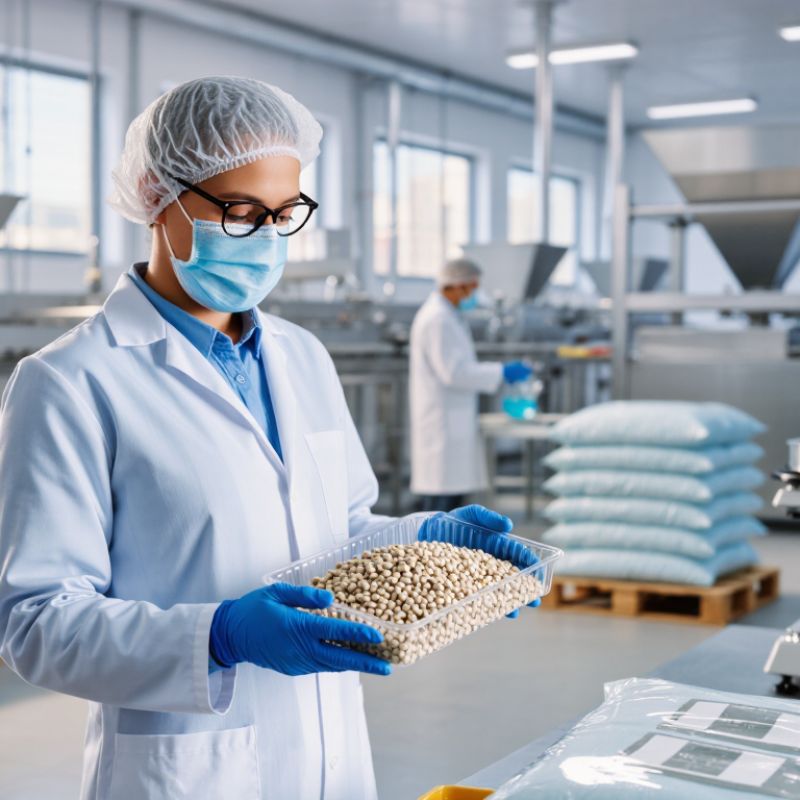
A reliable flushable cat litter begins with controlled raw materials, not a label. Plant fibers are screened for moisture, particle size, and contaminants, then milled, blended, and formed into granules. At the production line, operators check batch consistency and dust levels. A small change in fiber moisture can alter both clumping and breakup.
Testing needs more than a bucket of water. Labs can measure granule swelling, breakup time, residue, and performance in pipe sections with different flow conditions. ISO 14851:2019 provides a method for measuring aerobic biodegradability in aqueous conditions; it does not certify that a product is safe for every toilet or sewer. That distinction matters. APPA’s 2023–2024 National Pet Owners Survey estimated that about 82 million U.S. households owned pets, underscoring the scale of pet-care demand, but market size does not prove drain compatibility. Manufacturers should document test conditions, repeat tests across batches, and state disposal limits plainly. Even careful trials cannot reproduce every household’s plumbing. That is a real limitation. Testing should also consider local wastewater guidance, since infrastructure and treatment practices vary. A product may break apart in a lab and still behave differently in an older pipe.
A practical guide to common plant-based litter manufacturing steps and buyer checks. Test limits and product specifications vary by material, formulation, and supplier.
| Stage or Data Dimension | What Is Checked or Done | Typical Method or Record | What Buyers Should Verify |
|---|---|---|---|
| Raw material selection | Plant-derived materials may include processed soybean fiber, other food- or plant-based fibers, and starch-based binders. Formulations differ between products. | Supplier specification, incoming-material inspection, and batch traceability records. | Request the complete ingredient declaration, material origin, allergen information where relevant, and confirmation that no undisclosed mineral absorbent is included. |
| Incoming material condition | Materials are checked for visible foreign matter, odor, damage, and moisture-related deterioration before processing. | Documented visual inspection and moisture measurement using the supplier’s validated procedure. | Ask for the actual acceptance limits, instrument or method used, inspection frequency, and records linked to the production lot. |
| Size reduction and blending | Fibers or other ingredients are reduced to a suitable size and blended to help achieve consistent granules and absorbency. | Recorded ingredient weights, mixing time, equipment settings, and batch identification. | Confirm that production records support consistent formulation and that changes to ingredients or process settings are controlled. |
| Granulation and shaping | Moistened material may be formed into granules using suitable forming equipment; binders and processing conditions depend on the formulation. | Process log covering formulation, equipment settings, and in-process checks. | Request product-specific specifications for granule dimensions and shape, rather than relying on a generic industry figure. |
| Drying and cooling | Granules are dried and cooled to support storage stability and reduce unwanted breakage or caking in the package. | Moisture testing with a stated method, plus records of dryer and cooling conditions. | Ask for the finished-product moisture specification, test method, sampling plan, and recent lot results. |
| Screening and fines control | Screening separates granules by size and removes excess fines or oversized pieces; removed material may be handled according to the factory’s documented process. | Sieve analysis or another documented particle-size check; fines may be reported as a percentage by mass. | Request the particle-size distribution, fines limit, test procedure, and evidence that results are checked by production lot. |
| Absorption and clumping performance | Performance can be assessed using a defined liquid volume, contact time, and sample mass. Results depend on the test conditions. | Supplier’s written test protocol, with the liquid type, sample preparation, test conditions, and measured result recorded. | Compare suppliers only when test conditions are the same. Ask for repeatability data and do not treat a marketing claim as a standardized result. |
| Water dispersibility | A controlled water test can document whether and how quickly a sample breaks apart under the specified laboratory conditions. | Written protocol stating water volume, temperature, agitation, sample mass, test duration, and pass/fail criteria. | Request the full method and results. A laboratory dispersibility test does not prove compatibility with every toilet, pipe system, septic system, or wastewater facility. |
| Dust and physical durability | Handling tests can assess dust generation and granule breakage during transport or use. | Supplier-defined dust or attrition test with documented sample handling and measurement method. | Check the stated method, results, and packaging performance; “low dust” is not meaningful without a clear test basis. |
| Packaging and lot release | Finished litter is packed, sealed, labeled, and checked against the order specification before shipment. | Net-weight checks, seal inspection, label review, batch code, and retained-sample records. | Verify package material, declared net contents, production date or lot code, storage guidance, and a documented process for handling nonconforming lots. |
| Export and supplier qualification | Documentation requirements depend on the destination market, product composition, and buyer’s import arrangements. | Review product specification, safety data where applicable, test reports, quality-system documents, and shipping paperwork. | Confirm document validity and scope directly with the issuing body or relevant authority. Do not assume one certificate covers every market or product claim. |
Important disposal note: “Flushable” labeling does not establish that a product is suitable for every sewer, toilet, septic system, or wastewater treatment facility. Follow local utility and product instructions. Cat feces may contain pathogens, including Toxoplasma gondii, so follow local public-health guidance and do not assume that flushing cat waste is safe.
For global buyers, a “flushable” claim needs more than a neat label. Ask for the test method, laboratory report, and exact product formulation tested. A report should identify the sample, test conditions, and date; otherwise, it may not represent current shipments. Check how the litter breaks apart in water and whether testing assesses its effect on pipes or wastewater systems. Results can differ with water flow and local infrastructure.
Look beyond product claims. A quality-management certificate, such as one based on ISO 9001, can show that documented production controls exist, but it does not certify flushability. Request a current safety data sheet, ingredient information, and batch-level quality records. Confirm that any environmental or biodegradability claim names its standard and scope. A certificate can look reassuring. It can also be incomplete. I would verify the issuing body and expiry date, then compare the paperwork with a recent production sample. Buyers should also check local wastewater guidance, since acceptance varies by location. No single certificate answers every question.
A strong flushable cat litter supplier should be judged by evidence, not by a polished sample alone. Ask for recent test data on absorbency, dust, odor control, and breakdown in water. Check whether results cover routine production batches, not just a hand-selected sample. A simple check helps: compare granule size and moisture across several bags. Small differences can matter. “Flushable” also needs careful interpretation; disposal guidance varies by plumbing system and local wastewater rules.
Capacity is more than a large factory number. Ask how much litter is produced each month, how peak orders are scheduled, and whether packaging materials are secured in advance. Request a realistic production timeline and details on quality checks between batches. A supplier may promise fast output, yet leave little room for inspection or delays. That deserves a second look.
Export readiness shows up in practical details: clear product specifications, consistent carton markings, protective packaging, and experience preparing shipping documents for the destination market. Confirm who handles testing records and product information, and ask how they report a production issue. A short video of the packing line can help, but it cannot replace independent checks. No comparison is perfect; buyers should verify claims against samples, records, and their own import requirements.
A supplier’s sample should be tested like a product, not admired like a brochure. Ask for the material composition, batch details, and written flushing instructions. Check clumping, odor control, dust, and how quickly granules disperse in water. A sink test is only a screening step; it cannot prove compatibility with household pipes or wastewater systems. Follow local disposal guidance before flushing any litter. The Grand View Research Cat Litter Market report estimated the market at USD 5.3 billion in 2023, but market growth alone says little about one supplier’s quality.
Compare quotations line by line: product price, packaging, minimum order, tooling, inspection, and shipping terms. Request costs for the same order volume and destination. Then confirm production lead time, port of loading, carton dimensions, and who handles export documents. A low unit price can become costly when freight, damage, or delays are excluded. Get the final figures in writing.
Check samples against a signed specification, then ask whether bulk production will use the same formula and factory. Request recent quality records and a clear process for reporting defects, replacing goods, or resolving delayed shipments. Ask for a named contact and response-time commitment. Test again after arrival. Small differences matter. A spreadsheet cannot show every flaw, and even a careful sample check leaves some uncertainty. Keep that limitation visible in your purchase decision.
Plant fibers are screened for moisture, particle size, and contaminants. They are milled, blended, and shaped into granules. Operators also check dust and batch consistency. Small changes matter.
Labs can measure swelling, breakup time, residue, and behavior in pipe sections with different water flows. Tests should be repeated across production batches. One test is not enough.
No. A biodegradability method measures breakdown under specific water-based conditions. It does not certify compatibility with every toilet, pipe, or wastewater system. That distinction is easy to miss.
Ask for its material composition, batch details, and written disposal instructions. Check clumping, odor control, dust, and water dispersal. A sink test is only an early check. Not proof.
Ask about monthly output, peak-order scheduling, packaging availability, and production timelines. Check how quality is monitored between batches. A large factory figure can hide bottlenecks.
Look for clear specifications, consistent carton markings, protective packaging, and experience preparing destination documents. A packing-line video can help, but it cannot replace independent checks.
Compare the same order volume and destination. Request separate costs for product, packaging, inspection, and freight. Confirm lead time, port, carton dimensions, and document responsibilities in writing. Low prices can shift costs elsewhere.
Compare production goods with a signed specification. Confirm the same formula and factory will be used. Request quality records and a clear defect process. Test again after arrival. Some uncertainty remains.
Choosing a reliable Chinese supplier of Flushable Cat Litter means looking beyond the product description. Global buyers should assess how the litter is made, what materials and quality checks are used, and whether testing supports its performance and consistency. Relevant standards and certifications can help buyers understand a supplier’s quality-management practices and export readiness, while clear documentation makes it easier to evaluate products for different markets.
A thorough comparison should cover product quality, production capacity, order flexibility, communication, and experience handling international shipments. Before placing an order, buyers can request samples, confirm specifications and pricing, and discuss packaging, lead times, logistics, and after-sales support. Taking these steps helps reduce uncertainty and build a practical supplier relationship based on transparent information, dependable production, and expectations agreed in advance.

TOM'S FAMILY