Buying Bentonite Cat Sand across borders involves more than comparing the price per ton. Buyers need to consider how the product performs, how consistently it is supplied, and what it costs after shipping. A low quote may lose its appeal if bags arrive torn, the granules create too much dust, or clumps fall apart during use. Details matter.
Specifications can help, but they do not tell the whole story. Ask for clear information about granule size, moisture, dust control, packaging, and product consistency. Then compare samples under realistic conditions. Pour some into a tray, add water, and check whether it clumps firmly and is easy to scoop. Notice the dust, too. Small differences can matter to households and retailers.
Global buyers also need to look beyond the sample. Confirm production capacity, packaging options, lead times, and shipping terms with the supplier. Request relevant quality documents, and check whether they meet the requirements of your destination market. A polished brochure is not proof of reliable supply. That takes verification. The ten tips in this guide offer a practical starting point for comparing suppliers, evaluating product claims, and planning purchases with fewer surprises. No single specification suits every market, and that is worth remembering. A product that works well for one customer may disappoint another, so test carefully before placing a large order.
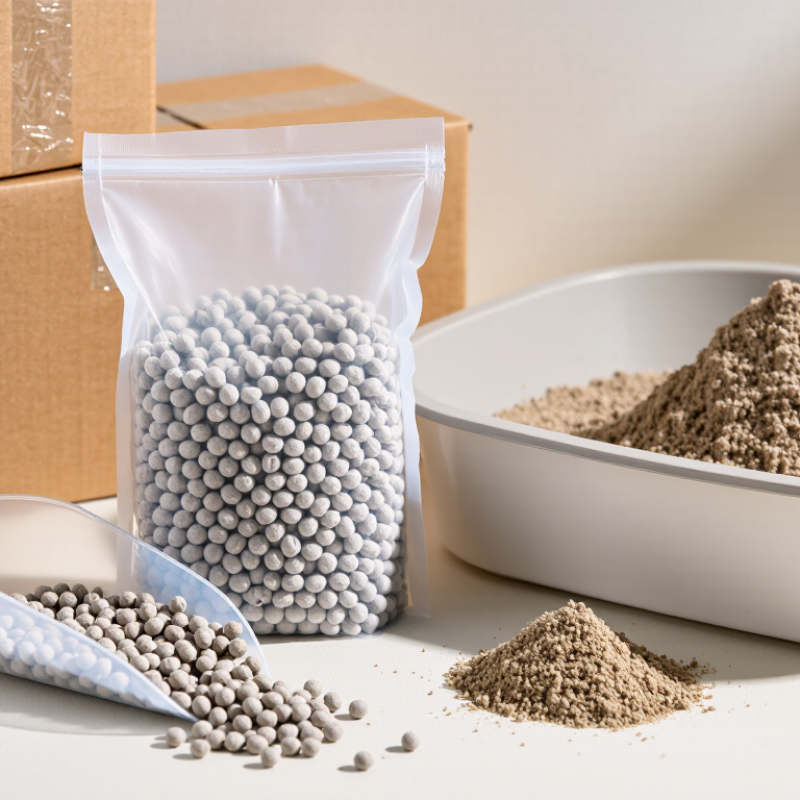
Bentonite cat litter is not one uniform material. Sodium bentonite absorbs liquid and expands, forming clumps that can be lifted from the tray. This type suits owners who prefer daily spot-cleaning and want to check how much litter remains. Clumps can still break if the granules are very fine or the tray is disturbed too soon. Give them a moment to firm up.
Calcium bentonite generally absorbs less liquid and is often sold as non-clumping litter. It may work for cats that prefer a lighter texture, though wet litter usually needs more frequent full replacement. Granule size matters, too. Fine grains may feel soft under paws but can track across a tiled floor; larger grains may reduce tracking, yet some cats reject the rougher feel. Small details matter.
For a multi-cat home, clumping litter can make frequent cleaning more manageable, but it does not remove the need to wash the tray. Unscented options are often a sensible starting point for cats sensitive to strong smells. Change types gradually, mixing a little new litter into the old over several days. A tidy-looking tray is not proof that every cat accepts it. Watch where your cat steps, how much dust rises when pouring, and whether the litter sticks to damp paws. I used to focus too much on clumping; comfort and easy access matter just as much.
| No. | Buying Tip | What to Check | Suitable Type or Use | Why It Matters |
|---|---|---|---|---|
| 1 | Choose between clumping and non-clumping litter | Check whether the product forms scoopable clumps when wet and review the recommended cleaning routine. | Clumping bentonite is commonly used for daily spot-scooping; non-clumping grades may suit users who prefer periodic full replacement. | These types differ in maintenance, litter consumption, and how waste is removed. |
| 2 | Review particle size and granule consistency | Request a particle-size range and check samples for excessive fines, oversize pieces, and inconsistent granules. | Fine granules may feel softer under paws, while coarser granules can be less easily scattered in some setups. | Particle size can affect tracking, dust, clump formation, and user preference. |
| 3 | Ask for dust-control information | Compare supplier test methods, dust specifications, and sample performance during pouring and scooping. | Low-dust grades are often considered for indoor use and households sensitive to airborne particles. | “Low dust” can be measured in different ways, so comparable test data is more useful than a claim alone. |
| 4 | Evaluate clump strength and setting time | Test whether clumps hold together during scooping and whether they break apart after absorbing liquid. | Strong-clumping grades are generally suited to routine removal of urine clumps. | Weak clumps may crumble, leaving more residue in the tray and increasing cleaning effort. |
| 5 | Compare odor-control approaches | Identify whether odor control relies on the mineral’s absorbency, fragrance, or another added ingredient. | Unscented litter may suit cats or households that prefer products without added perfume; scented products are a preference-based option. | Fragrance can mask odors but does not replace regular scooping and tray maintenance. |
| 6 | Check the ingredient list and additives | Request a full ingredient declaration, including any fragrance, colorant, or deodorizing additive. | Plain bentonite is a straightforward option; treated or blended products may offer additional features. | Clear ingredient information helps buyers assess product suitability and meet local labeling requirements. |
| 7 | Compare absorbency and moisture content | Ask for the test method and results for moisture content and liquid absorption; compare products using the same method. | Absorbent grades are used in both clumping and non-clumping litter formulations. | Test methods and conditions affect results, so figures should not be compared without context. |
| 8 | Assess tracking and granule shape | Check sample granules for shape, size distribution, and how much material is carried outside the tray. | Coarser or differently screened grades may be considered where reducing tracking is a priority. | Tracking varies with granule properties, litter depth, tray design, and cat behavior. |
| 9 | Confirm packaging and shipping suitability | Review bag material, net weight, pallet configuration, moisture protection, and handling requirements. | Retail bags suit consumer channels; bulk packaging may be more practical for distributors or repacking operations. | Bentonite is a mineral product, so packaging strength and moisture protection matter during storage and transit. |
| 10 | Verify documentation and destination-market requirements | Request current product specifications, safety information where applicable, origin details, and export documents required by the destination. | Apply this check to all bentonite litter types before placing a commercial order. | Import, labeling, and documentation requirements vary by market; buyers should confirm them with local authorities or qualified advisers. |
Sodium bentonite absorbs liquid and forms liftable clumps. Calcium bentonite usually absorbs less and is often non-clumping. Wet litter may need more frequent replacement.
Add a measured scoop to a clean tray. Remove clumps after the same waiting period each time. Firm clumps lift cleanly. Some may still crumble.
No. Remove waste regularly, and wash the tray. A tidy surface can still hide litter that needs changing.
Fine grains may feel soft, but can track across tile. Larger grains may track less, though some cats dislike their rougher feel. Watch your cat’s steps.
Yes, especially for cats sensitive to strong smells. Fragrance can mask odor rather than control it. Keep the comparison simple.
Pour equal amounts from a consistent height into a dark tray. Photograph visible dust in daylight. One quick pour is not enough.
Compare moisture, bulk density, dust level, particle size, and clumping performance. Ask how each value was measured and whether it matches the shipped batch. Paper specs help.
Check for a sealed inner liner, bag weight, dimensions, and pallet layout. A small trial shipment can reveal torn seams or crushed bags. It is not perfect, but it helps.
Choosing Bentonite Cat Sand for international markets involves more than comparing prices. Buyers should first understand the different litter types and consider how each suits household needs, then assess practical performance, including clumping strength, odor control, dust levels, and moisture absorption. Granule size can affect tracking, comfort, and ease of handling, while packaging and clear product specifications help ensure the litter is suitable for storage, transport, and the intended market.
Before placing an order, evaluate a supplier’s reliability, quality-control procedures, and relevant certifications. Request consistent product details and samples where appropriate. Finally, calculate the full landed cost rather than focusing on the unit price alone. Include packaging, freight, insurance, duties, and other import requirements in your budget, and confirm shipping arrangements in advance. A structured comparison of these factors can help global buyers select a dependable product and reduce surprises throughout procurement.

 TOM'S FAMILY