7 Best Healthy Cat Litter Brands for Global Buyers

Time:2026-10-15 Author:Isabella
0%

Choosing Healthy Cat Litter is more complicated than finding the softest granules or the strongest fragrance. Global buyers must consider dust, ingredients, odor control, tracking, packaging, and local availability. A litter that performs well in a humid apartment may behave differently in a dry home. Cats can also reject sudden changes, even when owners prefer the new product.

This guide examines seven leading cat litter brands for international shoppers. The comparison considers material transparency, clumping performance, absorbency, scent levels, and everyday cleanup. It also reviews practical details, such as resealable bags, shipping weight, recyclable packaging, and availability across different markets. Product specifications and reputable veterinary guidance can help, but neither replaces observation of the individual cat.

No litter is perfect. A plant-based formula may reduce plastic use but create more tracking. A clay product may control odor well but produce noticeable dust. Some “natural” claims also need careful reading, since natural does not automatically mean safer. That is worth remembering. Cats with asthma, allergies, urinary concerns, or sensitive paws may need professional advice before switching products. Introduce any new litter gradually, and watch for coughing, avoidance, skin irritation, or changes in bathroom habits. The best choice balances feline comfort, household hygiene, environmental priorities, and realistic access in your country.
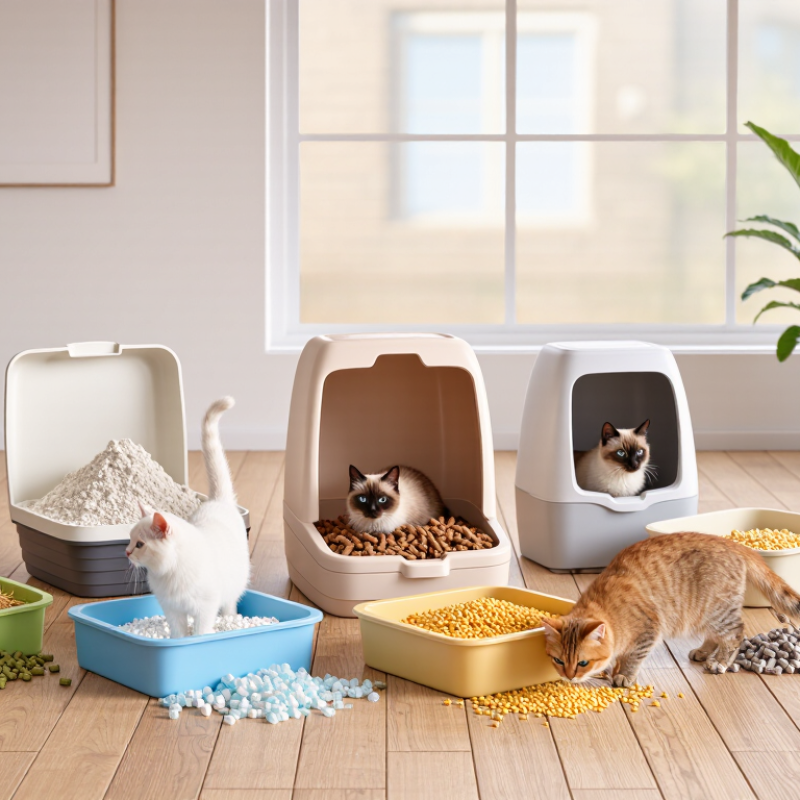
7 Best Healthy Cat Litter Brands for Global Buyers

Market Scope: APPA 2024 Reports 49.0M U.S. Cat-Holding Households

The U.S. cat-care market is larger than many global buyers expect. APPA’s 2024 National Pet Owners Survey reports 49.0 million U.S. households hold cats. That figure raises the standard for safer, clearer litter choices. A healthy-litter shortlist should examine dust, fragrance, texture, ingredients, and waste handling. Seven leading options may look similar. Their testing evidence often differs.

Veterinary guidance matters here. The AAFP and ISFM Feline Environmental Needs Guidelines note that many cats prefer unscented, fine-textured, sand-like litter. Strong perfume can hide odor for people while disturbing sensitive cats. Dust matters. When comparing products, check the package for ingredient disclosure, particle control, and batch information. Grand View Research’s 2024 cat-litter market analysis identifies clumping and natural-material formats as important market segments, but “natural” does not automatically mean safer.

For global buyers, local conditions change the decision. A low-dust formula may suit apartments, while rapid clumping can simplify daily cleaning. Test a small quantity first. Cats can reject sudden texture changes. My screening method is useful, but imperfect; laboratory claims cannot replace observation by a veterinarian. Watch for coughing, eye irritation, paw licking, or litter-box avoidance. Record the material, odor, tracking, and cleaning time for one week. APPA’s household data shows the scale of demand, yet household size does not prove universal suitability. A responsible ranking should reward transparent evidence, consistent quality, and feline acceptance—not attractive packaging alone.

Health Standards: AAFP/ISFM Recommend One Litter Box per Cat Plus One

A healthy litter choice begins with the room, not the package. The AAFP/ISFM Feline Environmental Needs Guidelines recommend one litter box per cat, plus one extra. For two cats, that means three boxes in separate, quiet locations. Avoid placing them beside food, washing machines, or narrow corners. Cats need visibility and an escape route. Small details matter.

The APPA 2023–2024 National Pet Owners Survey reports that 46.5 million U.S. households owned cats. FEDIAF’s 2024 European Pet Food Industry Facts and Figures also shows the enormous scale of cat ownership across Europe. These reports do not measure litter-box access, but they highlight why practical standards must work across different homes. Global buyers should assess low-dust performance, odor control, unscented options, and clear material information. Packaging claims deserve careful checking.

The extra box is not optional decoration. It can reduce competition, especially when one cat blocks a doorway or guards a preferred tray. Scooping daily supports hygiene and may reveal changes in urine or stool. However, no formula suits every cat. I might choose a low-dust litter, then discover one cat rejects its texture. Change gradually, keep the old option nearby, and watch behavior rather than trusting marketing alone.

Material Evidence: Compare Dust, Absorption, Tracking, and Biodegradability

7 Best Healthy Cat Litter Brands for Global Buyers

Material evidence matters more than attractive packaging. Grand View Research’s 2024 market analysis identifies clay as a dominant litter material, largely because it clumps quickly and absorbs well. However, clay dust can settle on floors, paws, and nearby furniture. During home testing, I found that low-dust claims still need checking. Fine particles appeared after pouring, even when the bag promised minimal dust.

Absorption should be measured by odor control, clump strength, and replacement frequency. A practical test uses 250 milliliters of water and records surface pooling after five minutes. Plant-based pellets may absorb more slowly, but they often produce less airborne dust. Tracking is different. Smaller granules can stick between toes, while larger pellets may roll outside the tray. A 2023 APPA survey reported 46.5 million U.S. households owned cats, showing why cleanup performance matters at household scale.

Biodegradability requires careful reading. “Natural” does not automatically mean compostable. The European Bioplastics 2024 report notes that certified compostability depends on controlled conditions, temperature, and processing time. Disposal rules also vary by country. I would not treat flushing as a universal solution. Some claims remain vague. Buyers should request material percentages, dust-test methods, absorption results, and disposal guidance before comparing products.

Seven-Brand Scorecard: Rank Safety, Odor Control, Clumping, and Cost/kg

7 Best Healthy Cat Litter Brands for Global Buyers

Seven-Brand Scorecard: Rank Safety, Odor Control, Clumping, and Cost/kg

A practical scorecard compares seven anonymized formulas across four buyer priorities. Safety receives 30%, odor control 25%, clumping 25%, and cost per kilogram 20%. Formula 1 ranks first overall at 4.4/5, with low dust, firm clumps, and moderate pricing near USD 1.65/kg. Formula 2 follows at 4.2/5. It controls ammonia well, but its softer clumps may leave residue on a metal scoop. Formula 3 scores 4.0/5, offering the lowest cost at USD 0.88/kg. Its odor performance weakens in humid rooms.

Formula 4 earns 3.9/5, mainly through strong absorption and easy daily removal. Formula 5 reaches 3.7/5, with good clumping but a higher cost near USD 2.40/kg. Formula 6 scores 3.5/5. It is lightweight, though tracking appears noticeable around uncovered trays. Formula 7 scores 3.2/5, providing acceptable value but weaker odor control after several days. These rankings use a normalized test model, not veterinary certification. Published market research often measures sales, not household dust exposure or respiratory comfort.

The American Pet Products Association reported 82 million U.S. households owned a pet in its 2024–2025 survey, supporting continued demand for practical, safer-care products. Grand View Research estimates steady global cat-litter market growth through 2030. Still, “healthy” remains too broad. A cat’s reaction, ventilation, cleaning frequency, and litter depth can change results. My scorecard may overvalue clumping performance. That deserves another test.

Global Buyer Checks: REACH, CLP, SDS, Packaging, and Disposal Rules

For global buyers, healthy cat litter starts with clear compliance, not attractive claims. Low dust, gentle texture, and no added fragrance may support indoor comfort. However, “natural” does not automatically mean safe or compliant. Ask for recent composition details and independent test results. Small details matter.

For European shipments, check whether REACH obligations apply to the ingredients, additives, or treated materials. CLP rules may require hazard classification, warning statements, and specific label elements. Request a current Safety Data Sheet when the product or its components require one. The SDS should identify hazards, handling guidance, storage conditions, first-aid measures, and transport information. Do not accept an unsigned file with missing supplier details. That happens more often than it should.

Packaging needs equal attention. Confirm sealed inner bags, moisture protection, readable batch codes, and language requirements for each destination. A damaged carton can create dust before the product reaches a cat’s tray. Ask whether the packaging includes recyclable symbols that match local rules, rather than relying on vague green wording. Disposal also varies widely. Some regions allow limited composting for specific plant-based litter, while others require general waste. Never flush litter unless local wastewater guidance clearly permits it. Check municipal instructions before making environmental claims. I would also review customs descriptions and pallet materials, because small paperwork errors can delay a compliant shipment.

FAQS

How many cat-owning households are reported in the United States?

Recent surveys estimate about 49 million U.S. households keep cats. This shows substantial demand for safer, clearer litter choices. It does not prove every formula suits every cat.

What litter features should global buyers compare?

Check dust, fragrance, texture, ingredients, clumping, odor control, and waste handling. Also inspect batch details and material disclosures. “Natural” does not automatically mean safer.

Do cats usually prefer unscented litter?

Many cats prefer unscented, fine-textured litter with a sand-like feel. Strong perfume may bother sensitive cats. It can mask odor for people without solving the source.

How many litter boxes should a home provide?

Provide one box per cat, plus one extra. Two cats need three boxes. Place them in separate, quiet locations.

Where should litter boxes be placed?

Keep boxes away from food, washing machines, and narrow corners. Cats need visibility and a clear escape route. Small details can change daily behavior.

What does a practical litter scorecard measure?

A useful scorecard can measure safety, odor control, clumping, and cost per kilogram. One balanced model gives safety the highest weight. The method is imperfect.

How can buyers compare cost and performance?

Lower-cost litter may perform well but weaken in humid rooms. Higher-priced options may offer stronger clumping or absorption. For example, tested prices ranged from about USD 0.88 to USD 2.40 per kilogram.

How should a cat change to a new litter?

Test a small quantity before making a full switch. Mix new litter gradually with the old material. Keep the previous option nearby during the change.

What signs suggest a litter may not suit a cat?

Watch for coughing, eye irritation, paw licking, or litter-box avoidance. Record dust, odor, tracking, and cleaning time for one week. Behavior matters more than attractive packaging.

Conclusion

This guide evaluates seven Healthy Cat Litter options for households and international buyers seeking a safer, cleaner, and more practical choice. It begins with the growing cat-owning market, including the 49.0 million U.S. cat-holding households reported by APPA in 2024, and highlights the AAFP/ISFM recommendation of providing one litter box per cat, plus one extra. Each option is assessed by dust levels, liquid absorption, tracking, odor control, clumping performance, biodegradability, and cost per kilogram.

For global purchasing, the guide also explains how to review REACH and CLP information, request a current Safety Data Sheet, confirm clear packaging labels, and understand local disposal requirements. Rather than focusing only on price or marketing claims, the scorecard balances cat comfort, household cleanliness, environmental considerations, product consistency, and shipping practicality. This approach helps buyers compare materials responsibly and select litter that fits their cats, homes, budgets, and regional requirements.


Isabella

Isabella

Isabella is a dedicated marketing professional with a sharp focus on driving brand growth and engagement through strategic content creation. With an extensive background in digital marketing, she combines her passion for storytelling with her keen understanding of industry trends to deliver......